If you’ve reached the point where Google’s Keyword Planner is holding you back, you’re not alone. Agencies, freelancers, eCommerce owners, and local service brands come to us because they’re tired of limited search-volume ranges, restricted keyword variations, and unreliable competition labels. At Pearl Lemon, we’ve tested dozens of keyword research platforms to identify the Best Keyword Planner Alternatives with more accuracy, deeper data, and clearer insights. If you want the data converted into a commercial search plan, see our keyword research services.
Explore our SEO services for related specialist support and resources.
According to Statista, more than 68 percent of online experiences begin with a search engine, and a Backlinko study reported that over 92 percent of keywords get fewer than ten monthly searches, meaning reliable long-tail data matters more than ever.
These 20 Keyword Planner alternatives will provide you reliable long-tail keywords to help you outrank the competition. They outperform Google’s tool in different ways such as deeper keyword variations, more precise search-volume numbers, real competition metrics, SERP analysis, and PPC insights that work.
What Is Keyword Research Software?
Keyword research software helps you identify phrases people type into search engines so you can plan content, SEO campaigns, PPC ad groups, and landing pages with accuracy. While Google’s Keyword Planner was designed primarily for advertisers, most businesses now require more detail: real keyword difficulty scoring, click-through estimates, competitor gap analysis, long-tail clustering, and accurate SERP intent evaluation.
Using the right Keyword Planner alternative lets your business:
• Spot revenue-driving terms competitors miss
• Build content briefs with strategic clarity
• Evaluate keyword difficulty using measurable data
• Plan ads based on real bid insights rather than vague ranges
• Create SEO strategies with stronger client-facing justification
Quick Comparison Table of the Best Keyword Planner Alternatives
| Tool Name | Best For | Starting Price | Free Trial | Rating | Key Feature |
| Semrush | Full-stack SEO | 129/mo | Yes | 4.6 | Deep SERP data |
| Ahrefs | Competitive research | 129/mo | No | 4.6 | Accurate KD |
| Moz Pro | Content marketers | 99/mo | Yes | 4.4 | Page grading |
| Ubersuggest | Beginners | 20/mo | Yes | 4.3 | Budget pricing |
| SE Ranking | Agencies | 55/mo | Yes | 4.8 | Rank accuracy |
| KeywordTool.io | Long-tail keywords | 89/mo | No | 4.5 | Autocomplete depth |
| Serpstat | Growth teams | 69/mo | Yes | 4.6 | All-in-one suite |
| SpyFu | PPC research | 39/mo | Yes | 4.5 | Competitor ads |
| LongTailPro | Niche sites | 59/mo | Yes | 4.3 | Long-tail scoring |
| Mangools (KWFinder) | Beginners | 29/mo | Yes | 4.7 | Clean UI |
| AnswerThePublic | Content ideas | 15/mo | No | 4.4 | Question mining |
| Keyword Surfer | Browser users | Free | N/A | 4.2 | SERP overlay |
| Wordtracker | Marketers | 27/mo | Yes | 4.0 | Commercial intent |
| Majestic | Link-focused SEO | 49/mo | No | 4.1 | Backlink index |
| Sistrix | Enterprise SEO | Module pricing | Yes | 4.6 | Visibility Index |
| BrightEdge | Enterprise teams | Custom | No | 4.7 | AI analysis |
| SimilarWeb Digital Marketing Intelligence | Market insight | 167/mo | Yes | 4.6 | Traffic sampling |
| Soovle | Idea-level research | Free | N/A | 4.0 | Multi-engine scrape |
| Keyword Sheeter | Idea bursts | Free/29/mo | No | 4.1 | Large exports |
| Rank Ranger | Agencies | 79/mo | Yes | 4.5 | SEO + PPC blend |
Best Keyword Planner Alternatives (Full Review)
Below are the best keyword planner alternatives of 2026:
- Semrush
- Ahrefs
- Moz Pro
- Ubersuggest
- SE Ranking
- KeywordTool.io
- Serpstat
- SpyFu
- LongTailPro
- Mangools (KWFinder)
- AnswerThePublic
- Keyword Surfer
- Wordtracker
- Majestic
- Sistrix
- BrightEdge
- SimilarWeb Digital Marketing Intelligence
- Soovle
- Keyword Sheeter
- Rank Ranger
1. Semrush
Semrush is one of the strongest Best Keyword Planner Alternatives because it delivers precise data across SEO, PPC, and competitor keyword tracking. Agencies, content teams, and growth-focused brands rely on it for detailed keyword metrics, SERP snapshots, and the kind of competitive data Google’s Keyword Planner cannot provide. A Semrush review often highlights its depth in competitive audits and its structured keyword difficulty scoring.
Key Features
Keyword Overview Engine
This feature provides search volume, trend charts, cost-per-click estimates, and keyword difficulty scoring with strong detail. It helps users judge whether a term can realistically rank or convert. Many Semrush features outperform Google Keyword Planner because they show granular data instead of vague ranges, making it easier to build accurate keyword clusters.
Keyword Magic Tool
A powerful keyword discovery module that generates large lists of long-tail variations. It scores each phrase based on volume, intent, and competitive demand. Users often reference the Keyword Magic Tool in a Semrush review because it helps shape content calendars with clear structure.
Competitor Keyword Gap
Semrush surfaces keywords competitors rank for but you do not. This helps agencies instantly spot growth opportunities. It is frequently used in Semrush vs Ahrefs comparisons because of its strong filtering options.
SERP Analysis Snapshot
A live SERP breakdown that shows ranking pages, link counts, structured data usage, and search intent classification. This helps users evaluate whether the keyword is worth pursuing based on page-level difficulty rather than a general metric.
PPC Keyword Insights
Detailed CPC history, SERP ad previews, and competition data make it a strong PPC tool. This section is often mentioned in Semrush alternatives discussions because not many tools match its ad data quality.
Pros and Cons
| Pros | Cons |
| Large keyword database | Pricing may limit small users |
| Detailed SERP snapshots | Can feel overwhelming at first |
| Strong competitor gap tools | No free full-access plan |
| Reliable KD scoring | Project limits on lower plans |
Pricing
Semrush pricing starts at 129 per month with higher tiers for agencies and enterprise users. A limited free trial is available.
Best For Agencies and Brands Managing Large Keyword Sets
Semrush fits teams that need granular keyword data and full-funnel insights.
• SEO agencies – scalable keyword data for multiple clients
• Content teams – structured keyword clusters for long-term planning
• PPC managers – CPC and ad insights that beat Keyword Planner
• Competitor-focused teams – keyword gaps and SERP-level intelligence
Verdict: Semrush remains the most complete option for users seeking Best Keyword Planner Alternatives with both SEO and PPC depth.
Use the Semrush Keyword Intent filter to prioritise keywords by commercial value. Many users overlook this filter, yet it quickly cuts research time by revealing terms tied to buying actions.
Best Alternate Tool
Ahrefs is the closest match if you prefer stronger link-focused data with fast keyword database updates.
2. Ahrefs
Ahrefs is one of the most trusted Best Keyword Planner Alternatives because of its strong backlink index and search data accuracy. Many Ahrefs review discussions highlight its keyword difficulty scoring and unmatched link metrics. It is widely used by SEOs who depend on precise search data and clear competitive insights.
Key Features
Keywords Explorer
Ahrefs provides clear keyword metrics with click probabilities, parent-topic identification, and long-tail suggestions. This is often referenced in Ahrefs vs Semrush comparisons because of its clean, reliable scoring.
Parent Topic Mapping
Ahrefs groups keywords under a single primary ranking opportunity. It helps content teams avoid wasted articles and target pages that actually rank.
SERP Click Data
One standout feature in many Ahrefs review summaries is the click prediction model, which adjusts volume estimates when Google ads or featured snippets reduce organic clicks.
Competitor Organic Keywords
Ahrefs can extract competitor keywords with strong clarity. Agencies rely on this to build campaigns that capture proven traffic.
Link-Based Difficulty Score
Ahrefs uses backlink profiles to judge competition, which many consider more realistic than broad difficulty estimates.
Pros and Cons
| Pros | Cons |
| Reliable keyword difficulty | No free trial |
| Strong link database | Higher pricing than some tools |
| Parent-topic grouping | Limited PPC insights |
| Detailed SERP click models | Can feel complex at first |
Pricing
Ahrefs pricing starts at 129 per month. There is no free trial, though limited free tools exist.
Best For Competitive SEO Teams Focused on Ranking Feasibility
• SEO strategists – strong keyword difficulty clarity
• Agencies – rich competitor keyword exports
• Content teams – parent-topic mapping to avoid wasted articles
• Link-focused teams – backlink-informed keyword decisions
Verdict: Ahrefs is one of the most accurate Best Keyword Planner Alternatives for competition-heavy niches where ranking is harder.
Use the “Traffic Potential” metric to prioritise topics. Even if a keyword looks small, its parent topic often delivers significantly more traffic.
Best Alternate Tool
Semrush is a practical alternative if you want deeper PPC and SERP features alongside keyword research.
3. Moz Pro
Moz Pro remains a favourite for content teams who want keyword data combined with accessible optimisation guidance. A Moz Pro review often mentions its balanced keyword difficulty model and clean, easy-to-read interface.
Key Features
Keyword Explorer
Moz’s keyword data includes difficulty, opportunity, and priority metrics. It is one of the Keyword Planner alternatives that helps marketers avoid low-value terms quickly.
SERP Analysis
Moz offers a clear visual breakdown of ranking pages and SERP features. It is often compared in Moz Pro vs Semrush discussions for its simplicity.
On-Page Grader
A valuable tool for content optimisation that pairs well with keyword research and helps writers structure pages correctly.
Custom Keyword Lists
Users can collect and score keyword groups, helping teams track potential value across content clusters.
Competitor Tracking
Shows visibility trends and ranking movement for targeted keywords.
Pros and Cons
| Pros | Cons |
| Easy to use | Smaller dataset than Semrush/Ahrefs |
| Clear keyword scoring | Slower updates in some regions |
| Helpful on-page grader | Lacks advanced PPC metrics |
| Good for content teams | SERP data less detailed than rivals |
Pricing
Moz Pro pricing begins at 99 per month, with a free trial available.
Best For Content Teams Needing Keyword Guidance Without Complexity
• Writers – simple keyword scoring metrics
• Small agencies – clean dashboards for client reporting
• Content designers – on-page grader for structured writing
• Blog teams – straightforward keyword discovery
Verdict: Moz Pro is perfect for teams that want clarity without heavy technical learning.
Use the Priority metric to quickly rank keywords based on competition, opportunity, and your site’s strength.
Best Alternate Tool
Mangools (KWFinder) is a good match if you want a simpler, lower-cost keyword tool with strong usability.
4. Ubersuggest

Ubersuggest is best known for its affordability, making it a popular choice among small businesses searching for Best Keyword Planner Alternatives that do not require a high budget. Many Ubersuggest review summaries highlight its simple interface and practical keyword variation features.
Key Features
Keyword Suggestions
Ubersuggest pulls keyword ideas with basic difficulty scoring. This tool is frequently compared in Ubersuggest vs KeywordTool.io discussions for affordability.
SEO Difficulty Estimates
Provides simple ranking difficulty numbers. Not as detailed as Ahrefs or Semrush, but enough for beginners.
Content Ideas
Shows top-performing pages for any keyword and their traffic estimates, helping users plan content direction.
Backlink Overview
Offers a lightweight snapshot of backlinks, often mentioned in Ubersuggest alternatives discussions as a starter-level link feature.
Rank Tracking
Tracks keyword positions with basic reporting for small teams.
Pros and Cons
| Pros | Cons |
| Low-cost lifetime access option | Less accurate data |
| Easy interface | Limited SERP analysis |
| Good for beginners | Keyword database smaller |
| Content ideas helpful | PPC data minimal |
Pricing
Starts at 20 per month, with a low-cost lifetime access plan.
Best For Beginners and Small Teams Building Basic Keyword Lists
• Solo marketers – clear and quick keyword ideas
• Small business owners – low-cost alternative to Keyword Planner
• Entry-level SEO learners – simple metrics
• Bloggers – intuitive content ideas
Verdict: Ubersuggest works well if you need budget-friendly keyword research without complex dashboards.
Use the Content Ideas tab to find pages with high social engagement that still have achievable keyword difficulty.
Best Alternate Tool
SE Ranking offers similar simplicity with a stronger keyword database and better rank tracking.
5. SE Ranking
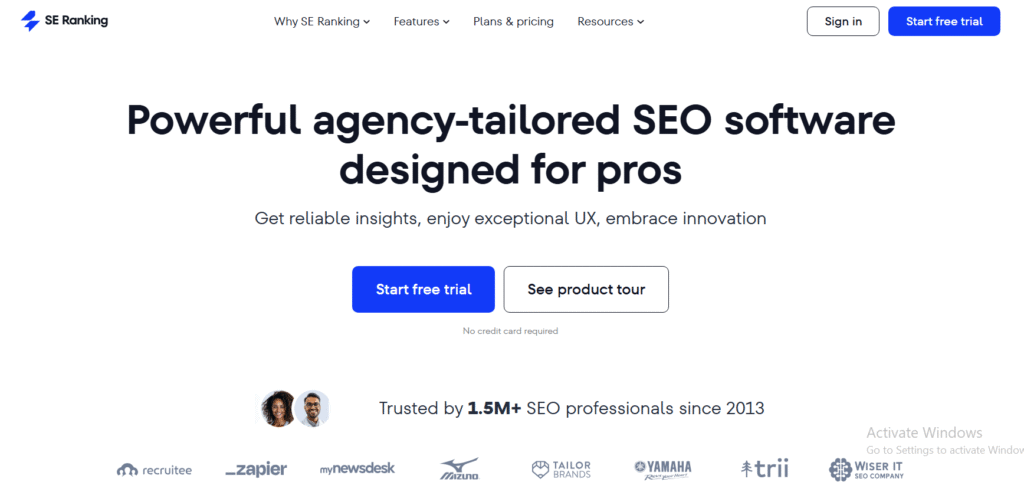
SE Ranking is one of the most balanced tools in the Best Keyword Planner Alternatives category, especially for agencies needing precise rank tracking. Many SE Ranking review discussions emphasise its clean dashboards and strong reporting features.
Key Features
Keyword Research Database
Provides volume, difficulty, trend, and SERP breakdowns. Often referenced in SE Ranking vs Semrush comparisons for its accuracy.
Rank Tracker
One of the most accurate trackers on the market, ideal for client reporting.
Competitor Research Tool
Reveals competitor keywords, PPC ads, and traffic trends with structured clarity.
Keyword Grouping
Clusters keywords automatically, which is useful for content planning.
On-Page Checker
Evaluates content for keyword use, structure, and optimisation opportunities.
Pros and Cons
| Pros | Cons |
| Strong rank tracking | Database smaller than Semrush |
| Clean UI | Some features feel light for enterprise |
| Good for agencies | Updates slower in certain regions |
| Affordable | SERP detail not as deep |
Pricing
Plans start at 55 per month, with a free trial available.
Best For Agencies Managing Client Keyword Campaigns
• SEO agencies – strong rank tracking for reports
• PPC teams – keyword insights with workable CPC data
• Content teams – keyword grouping and SERP clarity
• Local businesses – accurate local rank tracking
Verdict: SE Ranking is a solid mid-level tool for users who want strong accuracy without high costs.
Use the Keyword Grouping module to build cluster-based content plans in minutes rather than building them manually.
Best Alternate Tool
Serpstat is another balanced platform with strong keyword clustering and competitive data.
6. KeywordTool.io
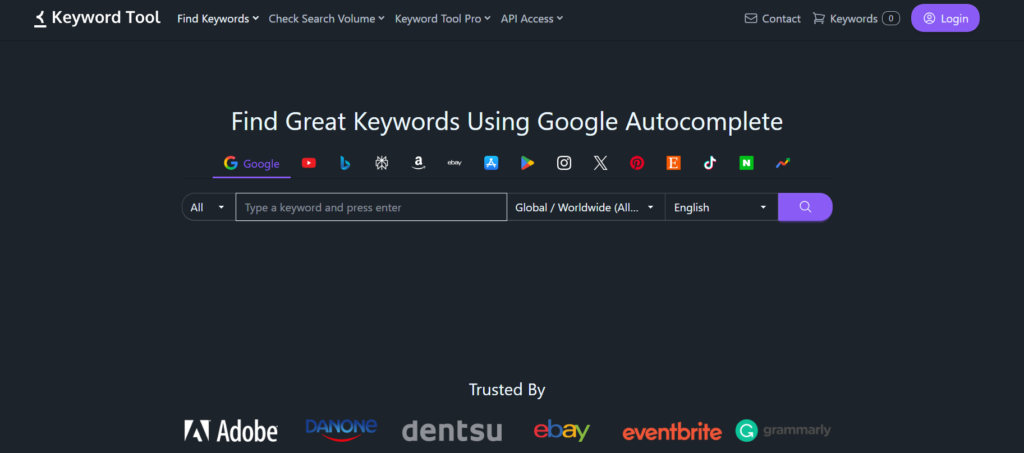
KeywordTool.io is one of the most dependable Best Keyword Planner Alternatives for long-tail searches. Many KeywordTool.io review summaries highlight its strength in generating keyword variations sourced from autocomplete engines across multiple platforms.
Key Features
Autocomplete Expansion
KeywordTool.io pulls keyword variations from Google, YouTube, Bing, Amazon, Instagram, and more. This makes it especially valuable for long-tail keyword strategies that Keyword Planner often cannot surface.
Search Volume Add-On
Volume data and competitive metrics are available with the paid upgrade. Users often mention this in KeywordTool.io pricing conversations because it improves the relevance of keyword lists.
Multi-Platform Research
Ideal for eCommerce, social, and content marketing teams who need keyword ideas beyond search engines.
Language and Location Filters
Enables detailed keyword targeting across hundreds of regions. This is one of the reasons it appears frequently in lists of KeywordTool.io alternatives.
Bulk Keyword Handling
Efficiently processes large keyword batches for quick expansion and filtering.
Pros and Cons
| Pros | Cons |
| Excellent long-tail suggestions | Volume data requires upgrade |
| Multi-platform support | Limited SERP analysis |
| Simple interface | Fewer competitor insights |
| Great for idea generation | No backlink metrics |
Pricing
Starting at 89 per month, with additional data tiers available.
Best For Teams Focused on Long-Tail Keyword Expansion
• eCommerce sellers – strong Amazon keyword suggestions
• YouTube creators – platform-specific autocomplete data
• Content teams – question-based keyword ideas
• Social marketers – keyword discovery across multiple platforms
Verdict: A strong choice when long-tail depth matters more than SERP details.
Use country-specific filters to uncover niche keyword variants that competitors rarely target.
Best Alternate Tool
Ubersuggest is a lighter, lower-cost alternative with basic long-tail generation features.
7. Serpstat
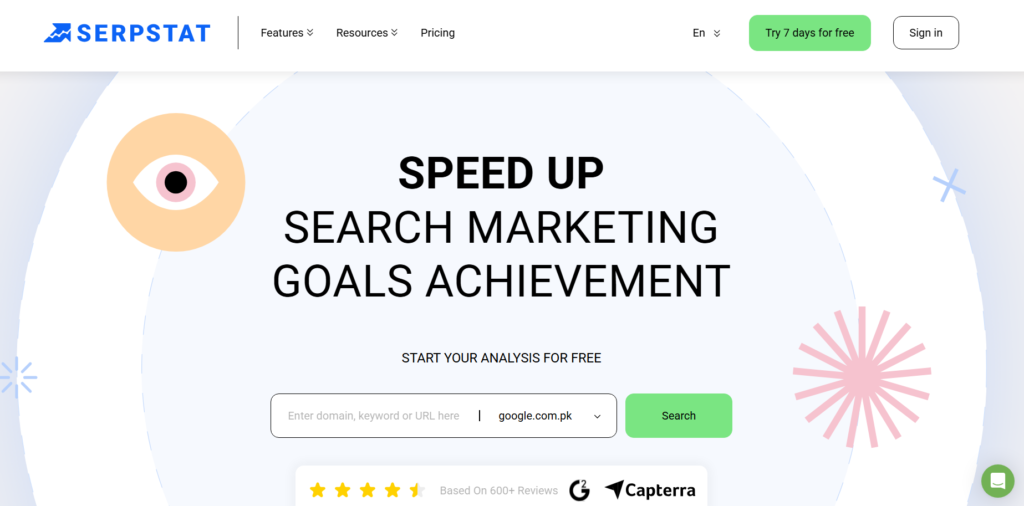
Serpstat is a balanced suite frequently mentioned in Best Keyword Planner Alternatives discussions. Many Serpstat review comments highlight its mix of keyword data, site audits, and competitive insights that work well for mid-sized teams.
Key Features
Keyword Research Suite
Provides keyword difficulty, volume, trend data, and SERP results making it a more complete tool than many other Keyword Planner alternatives in its price range.
Competitor Research Module
Helps teams uncover competitor keywords and content gaps clearly. Popular in Serpstat vs SE Ranking comparisons.
URL Analysis
Allows users to study keywords at the URL level, which is helpful for page-specific optimisation.
Keyword Clustering
Automatically groups related terms into clusters to help structure content strategies.
Batch Keyword Analysis
Processes thousands of keywords at once, useful for agencies and teams with large campaigns.
Pros and Cons
| Pros | Cons |
| Affordable for its range | Interface feels dated |
| Strong clustering | Updates slower than top-tier tools |
| Deep competitive analysis | Some metrics feel light |
| Good all-rounder | Lower accuracy in rare regions |
Pricing
Plans start at 69 per month, with a free trial available.
Best For Growing Teams Needing Balanced Keyword and Competitor Insights
• Agencies – scalable keyword and rank tracking
• PPC teams – workable CPC and competition data
• Content strategists – keyword clustering for structured planning
• Marketing departments – unified suite for multiple channels
Verdict: A practical mid-tier option with solid keyword and competitive research features.
Use the AI-powered clustering tool to organise keyword lists into structured content hubs far faster than manual grouping.
Best Alternate Tool
SE Ranking is a close match with a slightly more modern design and better rank tracking.
8. SpyFu
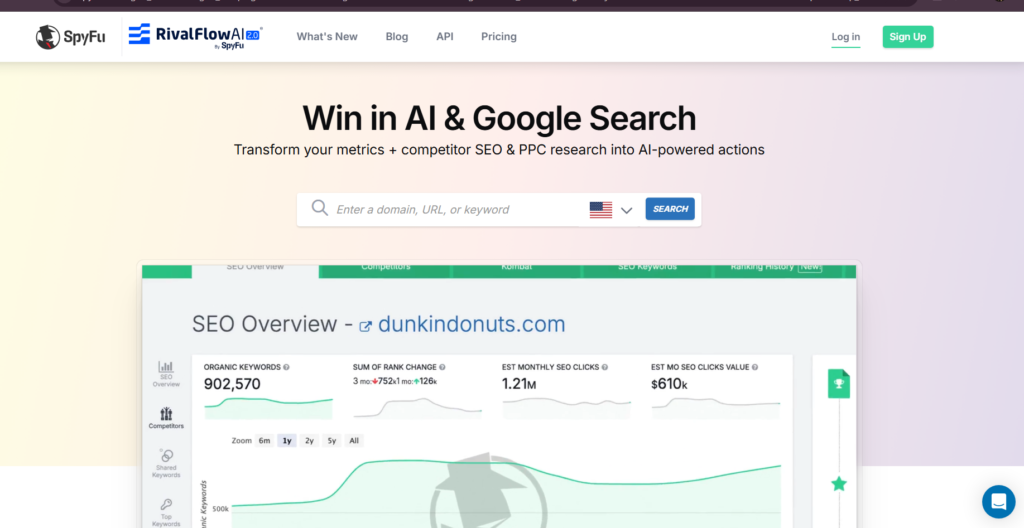
SpyFu is widely known for PPC and competitor ad analysis, making it a strong candidate among Best Keyword Planner Alternatives for users running paid search campaigns. Many SpyFu review discussions highlight its ability to uncover competitor ad spend and high-value PPC keywords.
Key Features
Competitor PPC Keyword Database
Reveals keywords competitors purchase, along with estimated spend and ad history.
Ad Copy Archive
Stores years of historical PPC ads. This is frequently cited in SpyFu vs Semrush comparisons.
Organic Keyword Tracking
Shows competitor organic ranking keywords and expected traffic.
Kombat Feature
Displays overlapping and unique keywords shared between multiple competitors.
Backlink Analysis
Basic backlink profiles to support SEO keyword decisions.
Pros and Cons
| Pros | Cons |
| Strong PPC keyword insights | UI feels cluttered |
| Useful competitor ad history | Limited SERP clarity |
| Affordable | Keyword difficulty less detailed |
| Great for PPC teams | Backlink data basic |
Pricing
Pricing begins at 39 per month, with a free trial available.
Best For PPC Teams Studying Competitor Ad Spend and Keyword Choices
• PPC specialists – track competitor ad keywords
• Agencies – fast PPC research for client accounts
• ECommerce advertisers – search terms tied to purchase intent
• Growth teams – track changing PPC patterns
Verdict: SpyFu is ideal when competitor PPC intelligence is more important than organic SERP depth.
Use the Kombat feature to identify keywords competitors recently added or dropped often a signal of changing performance.
Best Alternate Tool
Semrush is the strongest alternative if you need deeper SERP and PPC data combined.
9. LongTailPro
LongTailPro is consistently mentioned in lists of Best Keyword Planner Alternatives because it focuses specifically on long-tail keyword strength. Many LongTailPro review notes emphasise its competitive scoring system, which suits niche site builders and bloggers.
Key Features
Long-Tail Keyword Discovery
Offers deep lists of long-tail phrases, ideal for websites targeting low-competition queries.
Keyword Competitiveness Score
Provides a clear metric showing how difficult it may be to rank for any given keyword.
SERP Competitor Breakdown
Shows domain authority and backlink strength of ranking pages.
Batch Keyword Analysis
Lets users analyse large keyword lists quickly.
Rank Tracking
Tracks ranking performance for selected keywords.
Pros and Cons
| Pros | Cons |
| Strong long-tail focus | Smaller keyword database |
| Clean keyword scoring | Limited PPC data |
| Ideal for niche sites | No multi-engine research |
| Affordable | SERP data feels basic |
Pricing
Starting at 59 per month, with a trial available.
Best For Niche Site Builders and Bloggers Targeting Low-Competition Keywords
• Affiliate marketers – long-tail keyword depth
• Niche publishers – low-competition keyword scoring
• Beginner SEOs – simple ranking metrics
• Blog teams – easy keyword lists
Verdict: LongTailPro is a focused tool for long-tail keyword success.
Filter keywords by “KC below 30” to find low-competition terms suitable for new sites.
Best Alternate Tool
KeywordTool.io is a great alternative if you need even more long-tail variety.
10. Mangools (KWFinder)
Mangools, especially KWFinder, is often highlighted as one of the easiest Best Keyword Planner Alternatives to learn. Many Mangools review comments praise its simple UI, fast keyword suggestions, and beginner-friendly difficulty scoring.
Key Features
KWFinder Keyword Suggestions
Provides keyword variations with clear volume, trend lines, and difficulty scoring.
SERPChecker
Shows a clean SERP overview with authority metrics and ranking pages.
LinkMiner Integration
Works with Mangools’ link tool to evaluate backlink strength for keyword decisions.
Rank Tracker
Simple and easy keyword tracking for ongoing campaigns.
Local Keyword Support
Great for regional keyword targeting and local SEO.
Pros and Cons
| Pros | Cons |
| Very easy to use | Smaller keyword index |
| Clean UI | Limited PPC data |
| Affordable | Fewer competitor insights |
| Good for beginners | SERP analysis basic |
Pricing
Plans start at 29 per month, with a free trial.
Best For Beginners and Small Teams Needing Clear Keyword Data
• Small businesses – straightforward keyword handling
• Writers – clean keyword difficulty scoring
• Local businesses – location-based keywords
• Bloggers – simple SERP snapshots
Verdict: Mangools is a practical choice for users wanting simplicity without giving up essential keyword metrics.
Use SERPChecker with LinkMiner to assess backlink strength behind top results for accurate difficulty judgement.
Best Alternate Tool
Moz Pro offers a similarly clean experience with deeper on-page optimisation support.
11. AnswerThePublic
AnswerThePublic stands out among the Best Keyword Planner Alternatives because it visualises user queries in a format content teams find easy to act on. Many AnswerThePublic review notes highlight its strength in discovering question-driven search terms that Google Keyword Planner rarely surfaces.
Key Features
Question-Based Keyword Mapping
Shows people’s search questions grouped by how, what, when, and why, making it one of the best tools for building topic clusters.
Preposition and Comparison Data
Breaks keywords into modifiers like “for,” “with,” “near,” and comparison terms such as “vs” or “like.”
Unlimited Search Cycles (Paid Plan)
Allows frequent keyword searches for content teams handling publishing at scale.
Visual Keyword Wheels
Displays keyword relationships in a structured, easy-to-interpret format.
Trending Data
Shows whether interest in a topic is rising or falling.
Pros and Cons
| Pros | Cons |
| Excellent question discovery | Limited SERP analysis |
| Simple to use | Small metrics set |
| Strong for content ideation | No competitor research |
| Fast exports | Limited PPC value |
Pricing
Starts at 15 per month, no free trial.
Best For Content Teams Mapping Questions and Topic Clusters
• Blog strategists – deep question research
• SEO writers – clear content angles
• Agencies – fast ideation for clients
• Social teams – keyword intent understanding
Verdict: One of the strongest tools for uncovering content ideas that Keyword Planner often hides.
Use the “Comparison” section to find topics that naturally attract mid-intent readers searching for product differences.
Best Alternate Tool
Keyword Sheeter is a more aggressive idea generator if you need thousands of variations quickly.
12. Keyword Surfer
Keyword Surfer is a popular free choice among Best Keyword Planner Alternatives, especially for users who want keyword data inside Google search results. Many Keyword Surfer review summaries highlight the tool’s speed and convenience.
Key Features
In-SERP Keyword Metrics
Displays search volume, related terms, and estimated traffic directly inside the Google search results page.
Content Editor
Helps writers structure content around targeted keywords.
Keyword Similarity Model
Shows related phrases based on semantic similarity instead of pure volume matching.
Quick Keyword Collections
Users can save keywords into lists while searching.
Free Access
Many rely on Keyword Surfer as a free Keyword Planner alternative for daily checks.
Pros and Cons
| Pros | Cons |
| Free tool | Data less detailed |
| Works inside Google | No SERP snapshots |
| Simple interface | Limited competitive metrics |
| Fast keyword checks | No PPC info |
Pricing
Free, with optional paid upgrades depending on usage level.
Best For Users Who Need Fast, In-Browser Keyword Checks
• Writers – quick keyword confirmation while researching
• Bloggers – instant volume insights
• Beginners – no learning curve
• Small websites – budget-friendly research
Verdict: Ideal for fast keyword vetting without opening full dashboards.
Combine Keyword Surfer with a manual SERP review to build accurate content outlines without premium tools.
Best Alternate Tool
Mangools (KWFinder) is a simple, low-cost upgrade if you need more structured keyword analysis.
13. Wordtracker
Wordtracker is a classic tool in the keyword research space and appears frequently in discussions of Best Keyword Planner Alternatives for commercial-intent keywords. Many Wordtracker review threads highlight its focus on buyer-driven terms.
Key Features
Commercial Intent Filtering
Wordtracker’s database is tuned toward terms used by shoppers and service buyers, giving it a unique angle compared to typical keyword tools.
Dedicated Keyword Index
Uses its own index rather than relying on Google-based data alone.
Competition Score
Provides a simple scoring model based on top-ranking pages.
Bulk Import
Allows quick processing of long keyword lists.
Niche Keyword Discovery
Useful for uncovering profitable keywords that don’t show clearly in Google Keyword Planner.
Pros and Cons
| Pros | Cons |
| Strong commercial keyword focus | Smaller overall database |
| Easy competitor scoring | Limited SERP depth |
| Good for PPC and SEO | Interface feels dated |
| Useful for niche markets | No backlink metrics |
Pricing
Starts at 27 per month, with a free trial.
Best For Marketers Targeting Buyer-Focused Keywords
• PPC specialists – commercial-intent clarity
• Service businesses – buyer-oriented keyword lists
• Affiliates – niche commercial terms
• Agencies – commercial keyword research for clients
Verdict: Wordtracker is solid if your priority is revenue-focused keyword research.
Use the “Competition” score paired with commercial-intent filters to find purchase-ready keywords smaller tools overlook.
Best Alternate Tool
SpyFu is a strong alternative if you need deeper commercial and PPC keyword history.
14. Majestic
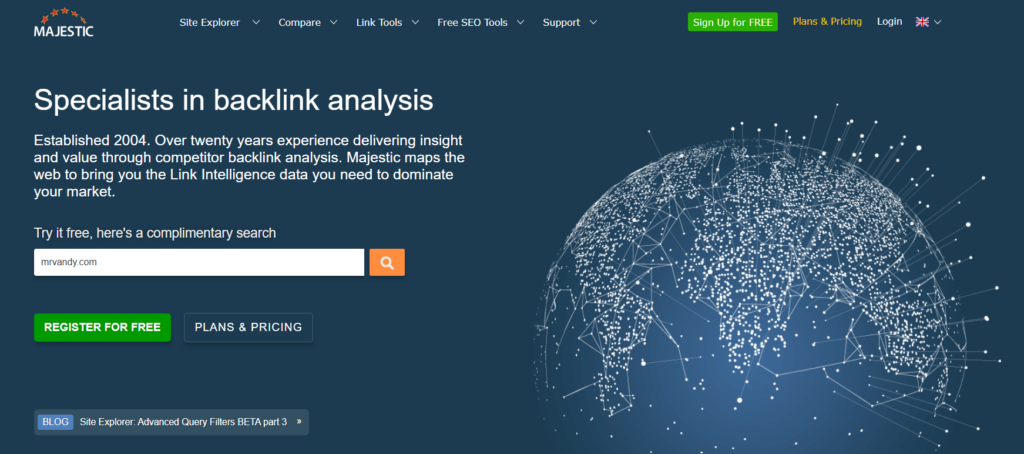
Majestic is typically known for its backlink metrics, but many SEOs still treat it as one of the Best Keyword Planner Alternatives when evaluating keyword difficulty. Majestic review conversations often highlight its Trust Flow and Citation Flow metrics.
Key Features
Trust Flow and Citation Flow
These proprietary metrics help users evaluate SERP difficulty by studying link strength.
Topic Index
Shows which topical categories are most relevant to ranking pages.
Backlink Database
One of the largest link indexes available, useful for keyword difficulty analysis.
URL and Domain Analysis
Helps benchmark ranking difficulty by studying page-level strength.
Historic Index
Reveals backlink trends over time for ranking pages.
Pros and Cons
| Pros | Cons |
| Strong backlink metrics | Limited keyword suggestions |
| Useful for ranking feasibility | No SERP feature analysis |
| Large link index | Not a full SEO suite |
| Great topical mapping | No PPC data |
Pricing
Plans start at 49 per month, no free trial.
Best For SEOs Evaluating Ranking Difficulty Through Link Strength
• Technical SEOs – link-based difficulty checks
• Agencies – competitor backlink evaluation
• Niche site owners – competition benchmarking
• Enterprise teams – large-scale backlink audits
Verdict: Majestic supports keyword research by delivering stronger backlink context than Keyword Planner provides.
Use Trust Flow scoring to eliminate keywords dominated by authority-heavy competitors.
Best Alternate Tool
Ahrefs is a more complete alternative if you need both backlink data and thorough keyword metrics.
15. Sistrix
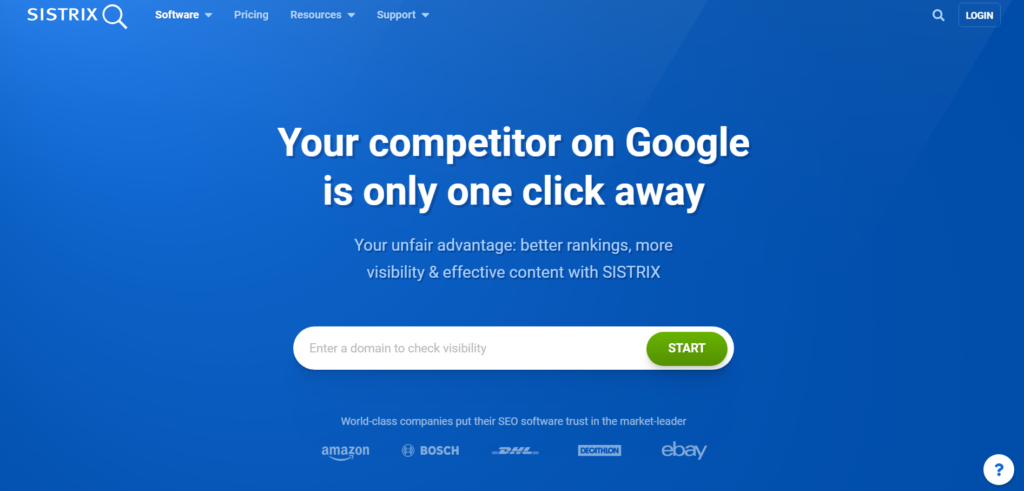
Sistrix is a respected European SEO suite that frequently appears in Best Keyword Planner Alternatives lists for enterprise teams. Sistrix review discussions often mention its Visibility Index and strong historical data.
Key Features
Visibility Index
Shows long-term performance trends across entire markets, making it ideal for competitive benchmarking.
Keyword Research Engine
Provides search volume, SERP snapshots, and ranking distribution.
Competitor Modules
Tracks competitors’ visibility, keyword gains, and losses.
Content Planner
Helps teams structure keyword groups and content topics.
URL-Level Insights
Useful for page-specific keyword and ranking evaluation.
Pros and Cons
| Pros | Cons |
| Strong visibility metrics | Module pricing adds up |
| Excellent historical data | Learning curve is higher |
| Reliable keyword data | Less affordable for small teams |
| Good competitor insights | Link data limited |
Pricing
Module-based pricing starting with individual feature sets. Free trial available.
Best For Enterprise SEO Teams Tracking Market Visibility
• Large brands – long-term keyword trends
• Agencies – market-level comparisons
• Publishers – ranking fluctuation monitoring
• Competitive markets – visibility benchmarking
Verdict: Strong for enterprise teams that need deep historical keyword and visibility tracking.
Use the Visibility Index to spot algorithm-related keyword volatility before traffic changes appear.
Best Alternate Tool
BrightEdge is a suitable option for enterprise-level organisations needing structured keyword and content workflows.
16. BrightEdge
BrightEdge is widely recognised among the Best Keyword Planner Alternatives for large organisations handling high-volume keyword campaigns. Many BrightEdge review discussions point to its strong content forecasting and enterprise workflow management.
Key Features
DataCube Keyword Engine
Provides precise keyword metrics, SERP snapshots, and topic insights at scale, making it strong for enterprise SEO planning.
Content Recommendations
Provides page-level keyword suggestions with actionable optimisation guidance.
Competitive Tracking
Shows keyword movements, intent shifts, and ranking opportunities across competitors.
Opportunity Forecasting
Projects potential traffic based on keyword targeting.
Workflow Management
Helps SEO teams organise tasks, documents, and keyword lists.
Pros and Cons
| Pros | Cons |
| Enterprise-level accuracy | Custom pricing only |
| Strong forecasting | Limited affordability |
| Full workflow integration | Requires onboarding |
| Market visibility tools | Not ideal for small teams |
Pricing
Custom pricing, no free trial.
Best For Enterprise SEO Teams Managing High-Volume Campaigns
• Large brands – broad keyword portfolios
• Agencies – enterprise reporting needs
• Publishers – keyword forecasting
• Multi-region teams – global keyword planning
Verdict: BrightEdge is built for enterprise users needing deep keyword clarity at scale.
Use DataCube’s topic grouping to identify hidden mid-intent themes that drive stable organic traffic.
Best Alternate Tool
Sistrix is a suitable alternative with strong historical visibility data.
17. SimilarWeb Digital Marketing Intelligence
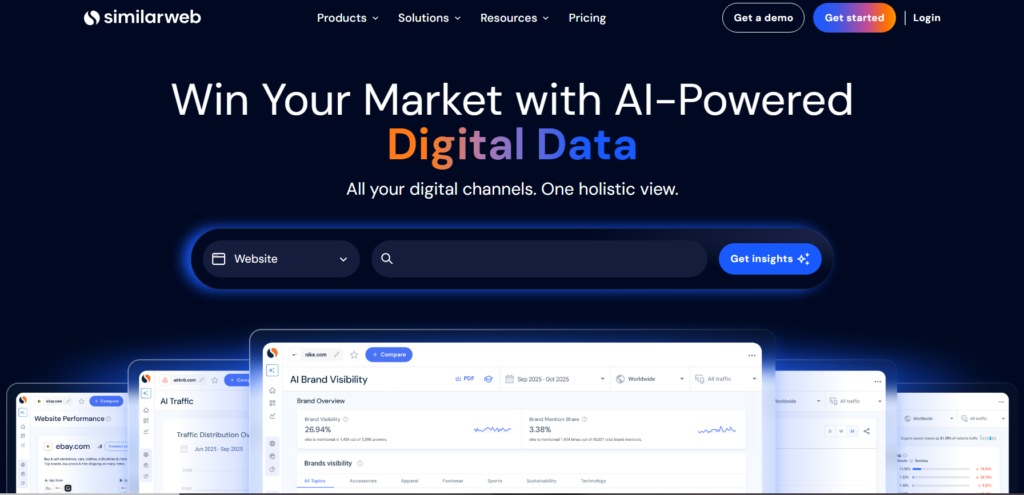
SimilarWeb is often mentioned in Best Keyword Planner Alternatives lists due to its ability to reveal traffic sources and keyword distribution across entire markets. Many SimilarWeb review summaries highlight its strong competitive intelligence.
Key Features
Market Traffic Sampling
Shows keyword traffic distribution across industries, helping teams identify rising terms.
Competitor Keyword Lists
Displays organic and paid keywords driving competitor traffic.
Search Intent Insights
Breaks keywords into informational, transactional, and navigational segments.
PPC Keyword Data
Reveals paid search patterns for competitor ad groups.
Website Benchmarking
Compares keyword performance across multiple sites in a single view.
Pros and Cons
| Pros | Cons |
| Strong competitor data | Higher pricing |
| Useful keyword patterns | Some data sampling limitations |
| PPC + SEO combined | Learning curve |
| Great for market trends | Not beginner-friendly |
Pricing
Starts at 167 per month, free trial available.
Best For Teams Studying Market-Level Keyword Trends
• Growth-focused companies – industry-wide patterns
• Agencies – cross-site keyword benchmarking
• PPC teams – competitor paid keyword data
• Content strategists – intent segmentation
Verdict: Strong for teams wanting keyword insights from a broader market perspective.
Use industry filters to find keyword pockets where competitors gain traffic from non-obvious sources.
Best Alternate Tool
SpyFu works well if you want more focused PPC competitor research.
18. Soovle
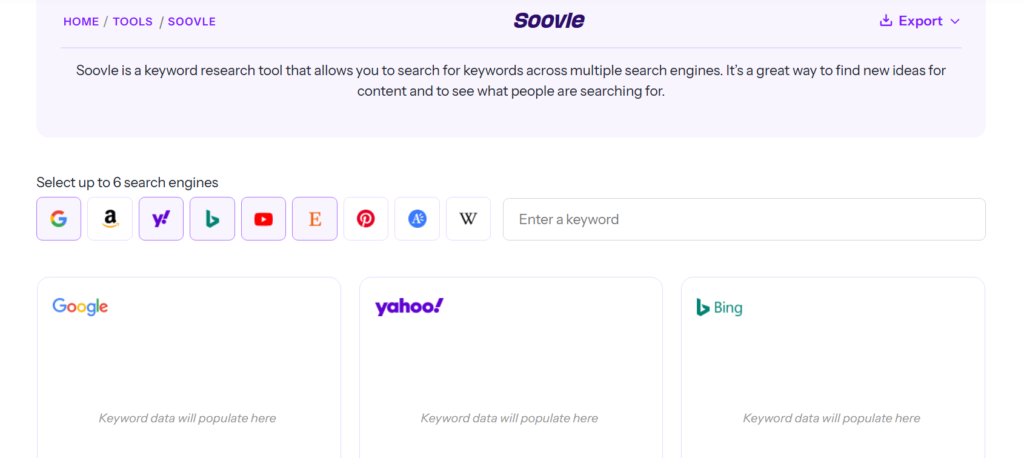
Soovle is one of the simplest yet effective Best Keyword Planner Alternatives for generating cross-platform keyword ideas quickly. Many Soovle review comments highlight its ability to collect autocomplete suggestions from multiple engines at once.
Key Features
Multi-Engine Autocomplete
Pulls keyword suggestions from Google, Bing, YouTube, Amazon, and other sources simultaneously.
Drag-and-Drop Keyword Saver
Lets users create keyword lists easily while exploring ideas.
Instant Suggestions
Updates keyword suggestions as you type.
Custom Search Engine Selection
Users can prioritise engines relevant to their niche.
Free Access
Ideal for quick idea generation without subscription costs.
Pros and Cons
| Pros | Cons |
| Free | No volume data |
| Multi-engine support | No SERP metrics |
| Fast idea generation | No keyword difficulty |
| Good for brainstorming | No competitor analysis |
Pricing
Best For Early-Stage Keyword Brainstorming Across Multiple Platforms
• Bloggers – initial keyword ideas
• Writers – creative topic inspiration
• Small teams – free research needs
• eCommerce sellers – Amazon-focused suggestions
Verdict: Soovle is ideal for generating starting lists before moving to deeper keyword tools.
Use Soovle first to gather ideas, then plug them into your chosen tool for volume and difficulty evaluation.
Best Alternate Tool
Keyword Sheeter offers higher output volume if you need thousands of suggestions.
19. Keyword Sheeter
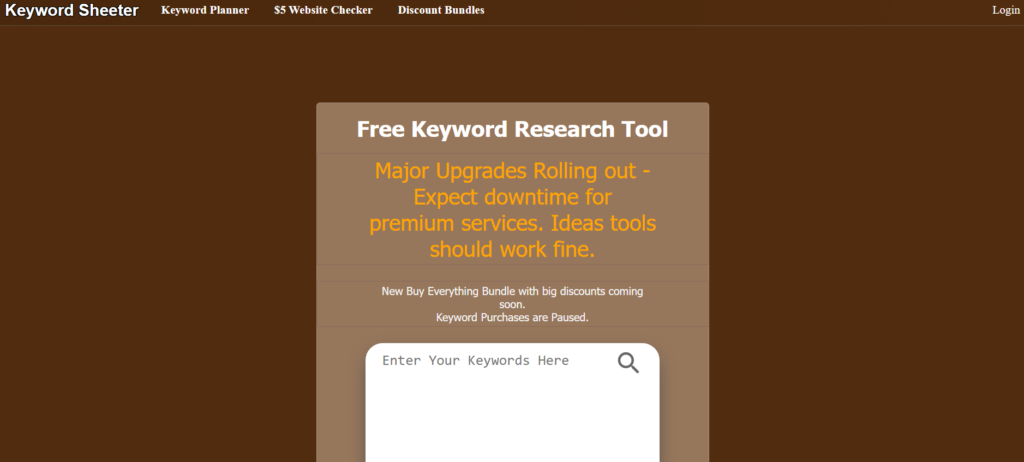
Keyword Sheeter is known for producing huge lists quickly, making it a useful addition to the Best Keyword Planner Alternatives for idea collection. Many Keyword Sheeter review notes highlight its raw speed.
Key Features
High-Speed Keyword Extraction
Generates thousands of keyword ideas in minutes.
Positive and Negative Filters
Allows users to shape keyword lists by including or excluding words.
Bulk Export
Saves massive lists into CSV format for deeper processing.
Difficulty and Volume Add-On
Optional upgrade that provides difficulty and volume estimates.
Multi-Language Support
Useful for multilingual websites and localisation planning.
Pros and Cons
| Pros | Cons |
| Extremely fast | Raw data without context |
| Huge keyword lists | Must pair with other tools |
| Good filtering options | Limited SERP insights |
| Free plan available | Paid upgrade for metrics |
Pricing
Free version available; paid add-ons from 29 per month.
Best For Teams Gathering Large Keyword Lists Before Filtering
• Agencies – early-stage keyword dumps
• SEOs – brainstorming at scale
• Content teams – new article ideas
• Niche builders – long-tail keyword discovery
Verdict: Great for collecting raw lists that you refine with other keyword tools.
Use negative filters to eliminate noise terms and reduce your keyword list from thousands to a manageable size.
Best Alternate Tool
AnswerThePublic is better if you want structured question-based keyword lists.
20. Rank Ranger
Rank Ranger is a versatile suite often featured in Best Keyword PlannerAlternatives lists for its mix of keyword research, reporting, and strong rank tracking. Many Rank Ranger review discussions highlight its robust dashboard options.
Key Features
Keyword Research Module
Provides volume, competition, SERP previews, and keyword suggestions.
Rank Tracking Engine
Tracks rankings across multiple locations and devices.
PPC Insights
Shows CPC, competition, and ad-driven keyword data.
Competitor Tracking
Displays keyword and ranking gaps compared with competitors.
Custom Dashboards
Helps agencies build white-label keyword reports.
Pros and Cons
| Pros | Cons |
| Strong tracking accuracy | Smaller keyword dataset |
| Good PPC metrics | Interface can feel dated |
| Agency-friendly reporting | Learning curve for setup |
| Multiple integrations | Occasional update delays |
Pricing
Starts at 79 per month, with a free trial.
Best For Agencies Needing SEO and PPC Keyword Reporting in One Platform
• Agencies – white-label keyword reporting
• PPC managers – detailed CPC and ad insights
• SEO teams – accurate multi-location rank tracking
• Content teams – SERP previews for topic decisions
Verdict: Rank Ranger is a practical combined SEO/PPC research tool with strong reporting features.
Use the multi-location tracker to compare keyword performance across different cities for local SEO campaigns.
Best Alternate Tool
SE Ranking is a strong alternative if you need easier reporting with similar functionality.
The Bottom Line
The Best Keyword Planner Alternatives listed above give your team options that outperform Google’s Keyword Planner in accuracy, keyword coverage, and actionable data. Whether you prioritise long-tail depth, PPC clarity, competitor analysis, SERP evaluation, or market-wide keyword insights, this list gives you tools capable of supporting campaigns that hinge on strong keyword strategy.
If you’re looking to refine your keyword research approach or want structured guidance on selecting the right tool for your business stage, our team is ready to support you with practical keyword strategy planning.
Schedule a consultation.
Get Expert Help
At Pearl Lemon, we work directly with brands that need keyword strategies built around business goals, not guesswork. Our keyword research process includes search-intent mapping, topic clustering, content forecasting, and competition modelling designed to give you clarity on the phrases most likely to drive conversions.
If your business needs an approach grounded in precision and repeatable processes, we can guide you through selecting the right tool and building a keyword system that fits your growth plans.
Schedule a consultation now.
Frequently Asked Questions
1. What qualifies a tool as one of the Best Keyword Planner Alternatives?
A tool must offer precise search volume, workable difficulty scoring, SERP insights, and reliable keyword discovery capabilities beyond the limited ranges in Google Keyword Planner.
2. Do these keyword tools support international SEO?
Most tools on the list provide regional volume data, country-level keyword variations, and localised SERP previews.
3. Which tool gives the most accurate keyword difficulty score?
Ahrefs typically provides the most link-focused difficulty scoring, while Semrush offers a balanced difficulty model combining multiple ranking factors.
4. Are these keyword planner alternatives suitable for PPC campaigns?
Tools like SpyFu, Semrush, and SimilarWeb Digital Marketing Intelligence deliver CPC trends, ad history, and competition data suitable for PPC.
5. How do long-tail keyword tools differ from standard keyword tools?
Long-tail tools prioritise generating variations with low competition and narrow user intent, which is ideal for niche websites.
6. What’s the best tool for competitor keyword analysis?
Semrush, Ahrefs, and SimilarWeb offer detailed competitor keyword extraction and visibility insights.
7. Can these tools replace Google Keyword Planner entirely?
Yes, many offer more useful metrics for SEO and PPC, though advertisers still use Keyword Planner for ad account estimates.
8. How often should I update my keyword list?
Most teams revise keyword lists every 60-90 days, depending on search trends and performance.
9. Are there keyword tools suited for small budgets?
Tools like Ubersuggest, Mangools, KeywordTool.io, and Keyword Surfer fit smaller budgets while still providing actionable data.
10. Which tool is best for content planning?
AnswerThePublic and Semrush’s Keyword Magic Tool are strong choices for topic ideation and content structuring.